
Lighting plays a vital role in every performance, but the infrastructure supporting it is just as important. In cinemas, theatres and performing arts venues, light mounting solutions for the cinema industry are far more than a way to suspend fixtures. They form the structural foundation of the entire lighting system and must be engineered to deliver safe, reliable performance for years to come.
Unlike residential or commercial lighting installations, stage lighting infrastructure is designed to support significant loads, accommodate changing production requirements and comply with strict safety standards. Whether you’re planning a new venue or upgrading an existing one, understanding how light mounting systems work can help you make informed decisions and avoid costly mistakes.
Why Light Mounting Is Different in Performance Venues
The lighting requirements of a theatre or cinema are very different from those of an office, retail store or residential building. Performance venues require infrastructure that supports both the technical demands of productions and the long-term safety of performers, technicians and audiences.
A professionally designed light mounting system typically considers:
• Structural loading: Lighting bars, trusses and suspension systems must safely support the combined weight of luminaires, cabling and future equipment upgrades.
• Flexible lighting layouts: Modern productions often require fixtures to be repositioned or replaced, making adaptable mounting systems essential.
• Power and control infrastructure: Lighting systems require dedicated power distribution, dimming equipment and control networks capable of supporting complex productions.
• Compliance and safety: Every installation should meet relevant Australian standards and structural requirements to ensure safe operation throughout the life of the venue.
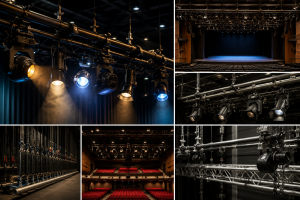
This is the same approach we’ve applied across completed venue projects, including the Bernineit Cultural Centre and the Gippsland Performing Arts Centre, where light mounting had to be engineered around each building’s specific stage configuration, not retrofitted from a generic kit.
Key Components of a Light Mounting System
A complete stage lighting installation includes far more than mounting points for lighting fixtures. Depending on the venue, the system may include:
Lighting Bars and Trusses
Lighting bars provide secure mounting positions for stage luminaires and are designed to accommodate the required load capacity while allowing easy access for maintenance and production changes.
House Lighting Integration
Many modern venues integrate house lighting with stage lighting so operators can manage both systems through a central control interface. This simplifies operation and creates a seamless experience for performances and events.
Lighting Control Systems
DMX control networks, dimming systems and intelligent lighting controllers allow operators to manage everything from conventional fixtures to advanced LED and moving-head lighting from a single console.
Power Distribution
Reliable power infrastructure ensures the lighting system can operate safely under full production loads without unnecessary interruptions or limitations.
When these components are designed together, venues benefit from improved reliability, easier operation and greater flexibility for future productions.
Planning for Long-Term Performance
Lighting infrastructure is expected to remain in service for many years, so planning for future requirements is just as important as meeting today’s needs.
When reviewing a new installation or refurbishment, consider the following:
• Is the mounting infrastructure designed to support future lighting upgrades?
• Has the structural loading been professionally assessed?
• Can operators control house and stage lighting through a unified system?
• Is the electrical infrastructure sized to support full production loads?
• Has the system been designed specifically for theatres, cinemas or performing arts venues?
Addressing these questions during the design stage helps reduce future upgrade costs while improving operational efficiency.
Light Mounting as Part of an Integrated AV Solution
Lighting infrastructure performs best when it is planned alongside the venue’s wider technology systems. Stage lighting regularly interacts with audio systems, production communication, projection technology and venue control systems.
Considering lighting as part of a complete AV integration strategy creates a more efficient venue, simplifies operation for technical staff and delivers a better experience for performers and audiences alike.
Getting Light Mounting Right From the Start
Whether you’re building a new cinema, upgrading a theatre or refurbishing a school performing arts centre, investing in professionally engineered lighting infrastructure provides long-term value. Safe mounting systems, reliable control technology and carefully planned power distribution all contribute to a venue that performs consistently for years to come.
With extensive experience delivering light mounting solutions for the cinema industry across theatres, schools, performing arts centres and cultural venues throughout Australia, ITE Integrated designs customised lighting systems that balance safety, flexibility and performance.
To see how these solutions have been delivered in real-world environments, explore our completed projects. If you’re planning a new build or upgrading an existing venue, contact ITE Integrated to discuss a lighting solution tailored to your operational and technical requirements.
Frequently Asked Questions
What load rating should a stage lighting bar support?
The required load rating depends on the venue’s structural design, the lighting fixtures being installed and any planned future expansion. Lighting bars should always be engineered specifically for the building rather than selected as standard off-the-shelf products.
Can existing lighting mounting infrastructure be upgraded?
In many cases, yes. Existing rigging may be retained while upgrading lighting fixtures, control systems or power distribution, provided the original infrastructure has sufficient structural capacity and complies with current safety requirements. A professional site assessment is recommended before any upgrade.
Should house lighting and stage lighting operate as separate systems?
While they can operate independently, integrating both systems into a single lighting control platform generally provides greater flexibility, simpler operation and a more efficient workflow for venue staff during performances and events.