
When audiences attend a theatre production, they rarely think about the technology working behind the scenes. They notice the actor delivering a powerful performance, the stage lighting technology that sets the mood, the crystal-clear dialogue and the visuals that bring the story to life. What they do not see is the complex network of systems making it all possible.
In modern venues, audio, lighting, projection and communication technologies must work together seamlessly. A single failure can disrupt a performance, frustrate technical crews and impact the audience experience. This is why professional AV integration has become an essential investment for theatres, performing arts centres and auditoriums across Australia.
Choosing the right AV integration specialist is not simply about purchasing equipment. It is about partnering with a company that understands how theatres operate and can design systems that remain reliable, practical and scalable for years to come.
Key Takeaways
- Theatre AV integration combines audio, lighting, visual and communication systems into one coordinated platform.
- Poor integration can lead to operational issues, technical failures and costly future upgrades.
- Theatre venues require specialist knowledge that differs from standard commercial AV installations.
- New theatre builds and venue upgrades demand different integration strategies.
- Working with an experienced AV integration company can improve performance, usability and long-term value.
Table of Contents
- What Is Theatre AV Integration?
- Why Theatre AV Projects Are Different
- The Hidden Cost of Poor AV Integration
- What to Look for in an AV Integration Specialist
- New Build vs Upgrade Projects
- Questions to Ask Before Hiring an Integrator
- Why Theatre Experience Matters
- Conclusion
What Is Theatre AV Integration?
Theatre AV integration is the process of bringing multiple technologies together into a single, cohesive system. Rather than operating independently, audio, lighting, visual and communication systems are designed to function as one.
A modern theatre environment often includes:
• Professional sound reinforcement systems
• Stage lighting and control equipment
• Projection and presentation technology
• Production communications systems.
• Assistive listening solutions
• Centralised control platforms
When properly integrated, these technologies allow operators to manage complex productions efficiently while ensuring consistent performance throughout the venue.
For example, a stage manager may trigger cues that simultaneously adjust lighting levels, launch video content and activate audio playback. Without proper integration, these actions often require multiple operators and increase the risk of human error.
Why Theatre AV Projects Are Different
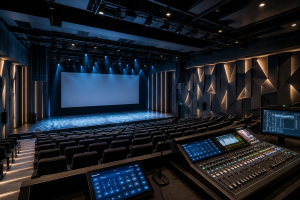
Many businesses advertise AV services, but not all AV projects are created equal.
A boardroom presentation system and a 600-seat performing arts venue have very different requirements. In a theatre environment, equipment must perform consistently under demanding conditions while supporting live productions where there is little room for error.
Unlike commercial spaces, theatres rely on constant interaction between different systems. Audio, lighting and visual elements must remain perfectly synchronised while backstage teams maintain production communication solutions throughout the production.
This is why venues should look for an AV integration company with proven experience in performing arts environments rather than a generalist commercial AV provider.
The Hidden Cost of Poor AV Integration
Many venues only realise the importance of AV integration after problems begin to appear.
A theatre may upgrade its sound system one year, install new stage lighting the next and add projection technology later. While each component may be high quality projection systems, they often struggle to operate effectively together if there is no overarching integration strategy.
The result is a venue filled with technology that works individually but creates challenges when used as a complete production system.
Common issues include:
• Audio and video synchronisation problems.
• Complicated control systems
• Inconsistent lighting cue execution
• Communication breakdowns between technical teams
• Increased maintenance requirements
• Limited flexibility for future productions
Over time these challenges reduce operational efficiency and increase costs. They can also affect the quality of performances delivered to audiences.
An experienced AV integration specialist prevents these issues by developing a unified design before equipment selection and installation begin.
What to Look for in an AV Integration Specialist
A qualified provider should have expertise across multiple technologies, including performance audio systems, lighting control, projection and venue-wide communications. This ensures every component functions as part of a unified solution rather than a collection of separate technologies.
Proven Theatre Experience
Start by reviewing previous projects.
A company with experience in theatres, performing arts centres and auditoriums will understand the practical realities of live productions. They know the importance of backstage communications, sightlines, acoustic performance and operator workflows.
Ask to see examples of completed projects and request references from venues similar to yours.
End-to-End Project Delivery
The best results are often achieved when one provider manages the entire process.
This typically includes:
• Consultation
• System design
• Equipment procurement
• Installation
• Programming
• Commissioning
• Training
• Ongoing support
A single point of responsibility helps ensure the finished system performs as intended.
Expertise Across Multiple Systems
Theatres require much more than audio expertise alone.
Your integration specialist should have experience with:
• Stage lighting systems
• Performance audio systems
• Projection systems
• Production communications systems
• Assistive listening technologies
• Automation and control systems
A venue functions best when all these technologies are designed as part of one coordinated solution.
New Build vs Upgrade Projects
One of the biggest mistakes venue owners make is assuming the same approach applies to every project.
New Theatre Builds
For new venues, AV planning should begin as early as possible.
When integration specialists become involved during the design stage, infrastructure can be incorporated into the building rather than added later. This often results in better system performance and lower long-term costs.
Early planning can influence:
• Equipment locations
• Control room layouts
• Cable pathways
• Rigging positions
• Power distribution
• Network infrastructure
Existing Venue Upgrades
Refurbishment projects require a different approach.
Instead of starting from scratch, the integrator must assess existing systems and determine which components should be retained, upgraded or replaced.
A thoughtful upgrade strategy can significantly improve venue performance without unnecessary expenditure.
Questions to Ask Before Hiring an Integrator
Before appointing an AV integration specialist, make sure you ask the right questions.
Some useful questions include:
• Can we speak with previous clients?
• Do you design and install systems in-house?
• What support services do you provide after project completion?
• How do you approach future upgrades?
• Can you train our technical team?
The answers will often reveal more about a company’s capabilities than any sales brochure.
Why Theatre Experience Matters
Theatre technology is not just about equipment. It is about understanding how people use that equipment during live performances.
Technical crews need systems that are intuitive. Venue managers need reliability. Performers need confidence that cues will execute correctly every time.
This is where specialist knowledge becomes invaluable.
Companies with theatre experience understand the relationship between stage lighting, audio reinforcement, projection systems and production communications. More importantly, they know how to combine these technologies into a practical solution that supports the venue’s operational goals.
That expertise often makes the difference between a system that simply functions and a system that genuinely enhances every production.
Conclusion
Investing in theatre AV integration is about more than technology. It is about creating an environment where performers, technical crews and audiences can enjoy the best possible experience.
Whether you are planning a new performing arts venue, upgrading an ageing auditorium or expanding your existing capabilities, choosing the right specialist is critical.
An experienced AV integration company will design systems that are reliable, easy to operate and ready for future growth. By taking a strategic approach from the beginning, venues can avoid costly mistakes and ensure their investment continues to deliver value for many years to come.
For Australian theatres, performing arts centres and auditoriums, partnering with a specialist such as ITE Integrated provides access to decades of experience in AV integration, stage lighting, performance audio, projection systems and production communications.
Speak with the team at ITE Integrated to discover how a professionally integrated AV system can enhance performance quality, improve operational efficiency and future-proof your venue.